John Howe
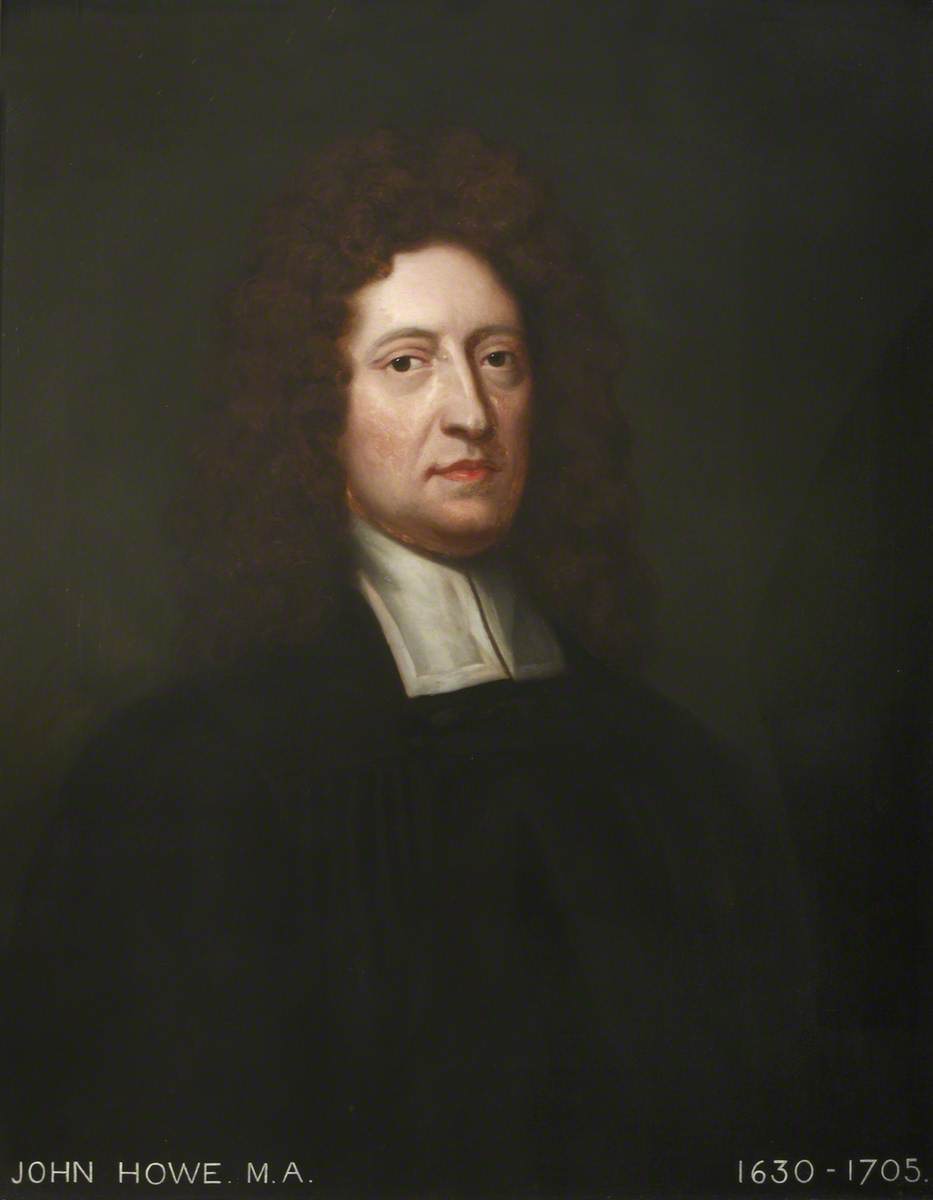
Domestic chaplain to Oliver and Richard Cromwell, ejected pastor of Great Torrington, and one of the most philosophically minded of the English Puritans.
John Howe (1630 – 1705)
Howe was born at Loughborough, the son of a Puritan minister who was sequestered from his living in 1634 for refusing to read the Book of Sports. The family fled to Ireland and returned to England during the Civil War. Howe studied at Christ's College, Cambridge — where he was a contemporary of Henry More and Ralph Cudworth — before completing his B.A. at Brasenose College, Oxford, in 1649 and his M.A. at Magdalen in 1652.
After ordination by the Independent congregation at Winwick he became minister at Great Torrington in Devon, where his Sunday services were famously long: a contemporary records that on fast days he preached without break from nine in the morning to four in the afternoon. In 1657 Cromwell summoned him to Whitehall as domestic chaplain, a post he kept until Cromwell's death and continued under Richard Cromwell. He returned to Torrington at the Restoration and was ejected in 1662.
After the Five Mile Act he served as chaplain to Lord Massereene at Antrim Castle in Ireland from 1671 to 1675, returning to London to take charge of the Presbyterian congregation in Silver Street, Wood Street, where he ministered for the remaining thirty years of his life. He travelled to the Netherlands during the worst years of persecution under James II and returned at the Glorious Revolution in 1688. His Living Temple, an attempt to demonstrate the existence of God from reason and revelation together, was widely admired by later writers including Edwards.
“It hath been long my apprehension that, while we are speaking and writing about religion, we should still keep our eye upon the soul, that great spectator and judge of all our discourses.”
— Preface to The Living Temple (1675)
Books by John Howe
Modernised editions, with the original arguments preserved.