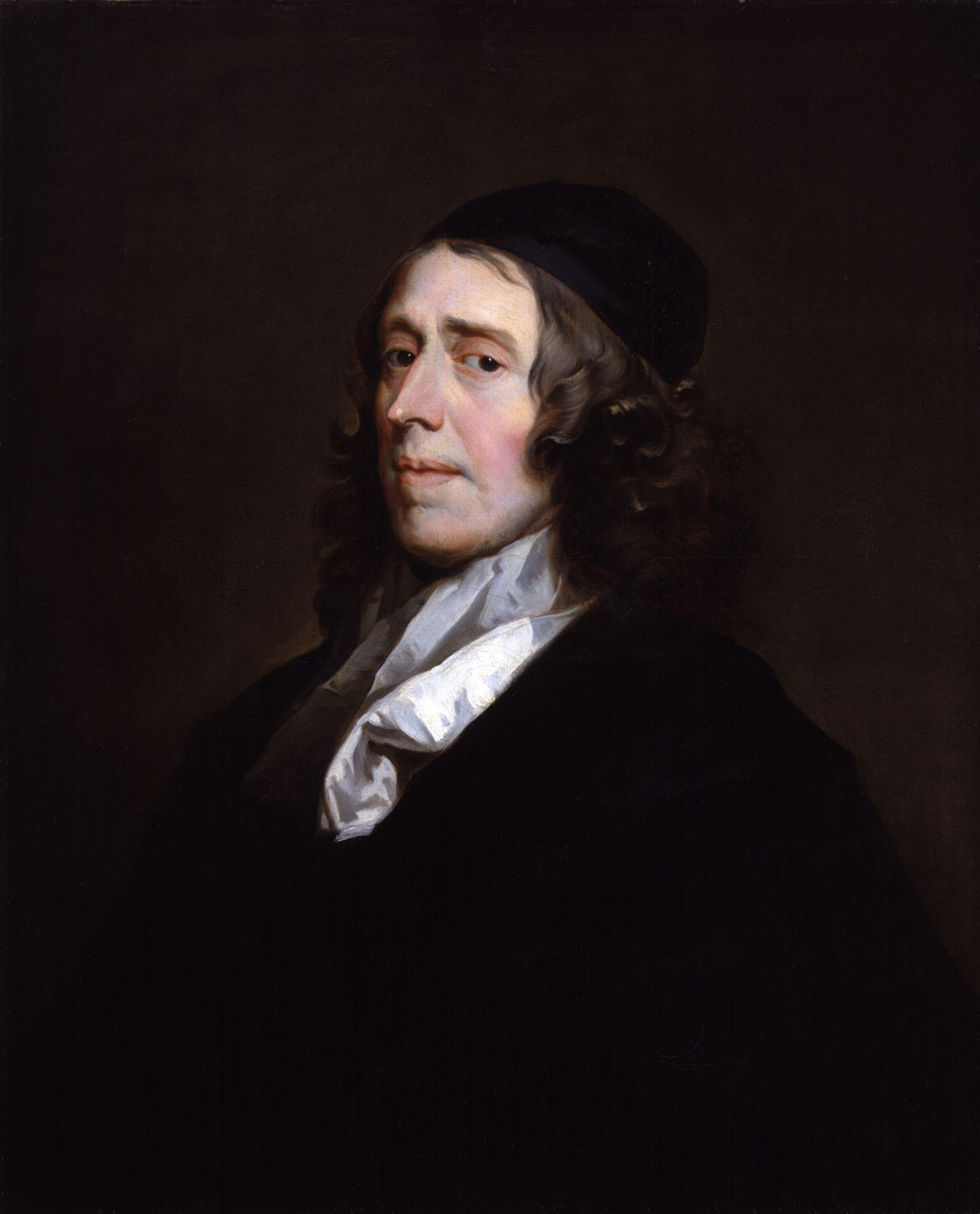
John Owen
Cromwell's chaplain, Vice-Chancellor of Oxford under the Commonwealth, and the most substantial English-language theologian of his century.
John Owen (1616 – 1683)
Owen was born at Stadhampton, Oxfordshire, the son of a Puritan vicar. He matriculated at Queen's College, Oxford, at twelve, took his B.A. in 1632 and M.A. in 1635, and was ordained in 1637; his Puritan sympathies brought him into conflict with Archbishop Laud and he resigned his fellowship the following year. He served as a chaplain during the Civil War and preached before Parliament the day after the execution of Charles I in 1649.
Cromwell appointed him Dean of Christ Church in 1651 and Vice-Chancellor of Oxford in 1652. From this position he reorganised the university — restoring discipline and the syllabus, and resisting both the imposition of a Presbyterian establishment and the Quaker disturbances of the 1650s. After the Restoration in 1660 he was deprived of all his offices and lived for the rest of his life as a Nonconformist minister in London. He repeatedly refused offers of preferment in exchange for conformity, and in 1665 narrowly escaped indictment under the Five Mile Act.
His Death of Death in the Death of Christ (1647) remains the standard Reformed defence of particular redemption; Communion with God (1657) and the seven-volume Exposition of Hebrews (1668 – 84) cemented his reputation. Charles II is said to have remarked to him that he 'would give a large sum to be the gainer of so much' as Owen was reputed to know — a remark that may be apocryphal but captures the consistent contemporary judgement of his learning.
“Be killing sin or it will be killing you.”
— The Mortification of Sin in Believers (1656)
Books by John Owen
Modernised editions, with the original arguments preserved.